Quick answer: Local SEO services typically combine Google Business Profile optimization, consistent citations across directories, location pages for multi-area businesses, review generation, and local schema markup, all working together to help a business show up in map pack results and "near me" searches. Google Business Profile carries the most weight of any single piece, because it is the listing Google leans on most heavily for local intent, but a complete service builds the supporting systems around it rather than treating it as the whole job. Increasingly, the same profile, citation, and schema signals also shape whether AI assistants and AI Overviews recommend a business for local questions, not just Google's own map pack.
If you have asked a marketing company what "local SEO" actually includes and gotten a vague answer about "improving your visibility," you are not alone. Local SEO is a specific, deliverable-based service, and for a business that depends on nearby customers finding it (a dentist, a plumber, a law firm, a restaurant, any business with a physical location or service area) the work looks different from general SEO built to rank a website nationally.
The confusion usually starts with Google Business Profile. Some owners assume it is the entire job. Others assume it barely matters compared to the website itself. In practice, it is the foundation almost everything else is built around, and understanding why makes it much easier to evaluate any local SEO service on what it actually delivers instead of what it promises.
Why Your Google Business Profile Is the Center of Local SEO

Google Business Profile (GBP) is the free listing that populates the map pack, the block of local results Google shows above the standard organic listings for searches with local intent. For "near me" style searches, that block tends to get the bulk of a searcher's attention before they scroll to organic results, which is why an under-optimized profile can quietly cost a business its most valuable traffic.
A proper Google Business Profile optimization service usually works through several layers of the same listing, not just the basics:
- Categories: the primary and secondary categories you choose tell Google what searches you are eligible to appear for, and picking the wrong ones is a common reason an otherwise strong business stays invisible in the map pack.
- Posts: regular updates about offers, services, and events keep the profile active and give Google fresh signals to work with, rather than a listing that has looked identical for years.
- Questions and answers: questions there can be answered by anyone if the business itself never shows up, so managing it proactively keeps incorrect information from sitting on the profile indefinitely.
- Photos: profiles with current, relevant photos tend to hold a searcher's attention longer than ones using outdated or generic images.
- Reviews and review responses: covered in more detail below, but review activity and how a business responds to it both influence how the profile performs.
A website still matters. But the Google Business Profile is the layer Google relies on most directly for local intent, which is why most local SEO work starts here before moving outward to the rest of the business's online presence.
What Local SEO Services Include Beyond Your Google Business Profile
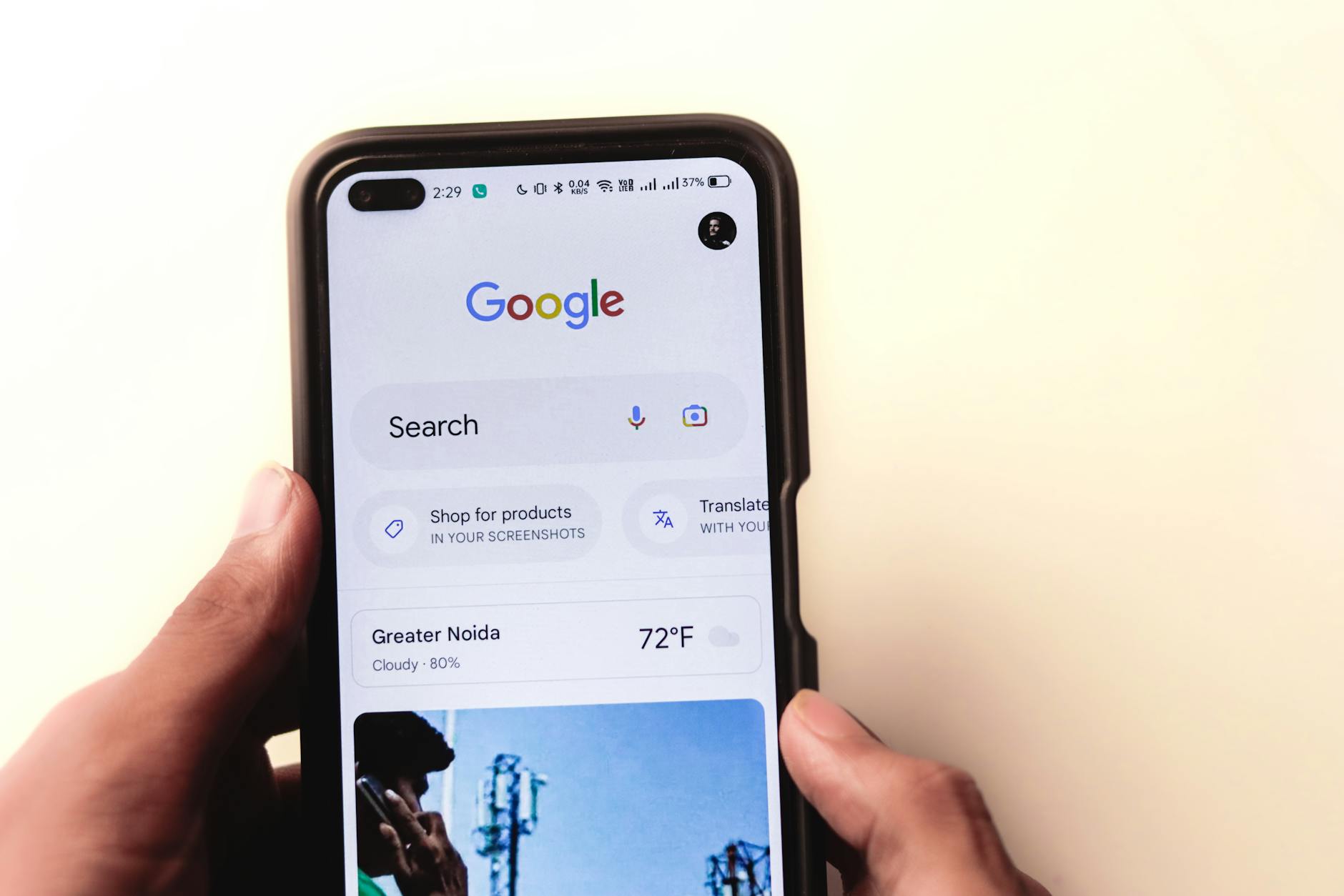
A Google Business Profile does not operate in isolation. Google cross-checks the information on it against what it finds elsewhere on the web, and a complete local SEO service typically builds out several supporting pieces around it:
- Citation consistency: your business name, address, and phone number (often shortened to NAP) need to match across directories, industry-specific listings, and data aggregators. Inconsistent citations create confusion about which version of your information is correct, which can hold back local visibility even when the website itself is solid.
- Location pages: a business serving more than one city, neighborhood, or service area usually needs a dedicated page for each one, built around the specific services offered there rather than the same content with only the city name swapped out.
- Review generation: instead of hoping happy customers leave reviews on their own, a structured system (requests sent after a job or visit, a simple link to the review page, and a habit of responding to what comes in) keeps review volume and recency moving in the right direction.
- Local schema markup: structured data added to the website's code that explicitly tells search engines, and increasingly AI systems, the business type, service area, hours, and location details in a machine-readable format.
These pieces reinforce each other. A profile with strong reviews and clean citations but no location pages will struggle for service-plus-city searches. A well-built location page paired with inconsistent citations sends mixed signals about where the business actually operates. A complete service treats all of it as one connected system, not a checklist you work through once and forget.
How Local SEO Differs From General SEO
General or national SEO ranks a website for keywords with no geographic component, competing against every other site targeting that same term regardless of where it is based. Local SEO adds a different layer on top of that: proximity to the searcher, Google Business Profile signals, and the trust cues that matter specifically to nearby customers, such as reviews and posted hours.
- Ranking factors: national SEO weighs content depth, site authority, and backlinks most heavily. Local SEO folds in proximity, profile completeness, and review activity alongside those same factors.
- The competitive set: a national campaign competes with every website targeting a keyword, anywhere. A local campaign mainly competes with the businesses physically serving the same city or neighborhood.
- What counts as a result: national SEO is often judged on traffic and rankings on their own. Local SEO is judged more directly against calls, direction requests, form submissions, and foot traffic, because that is what a map pack listing is actually built to produce.
This is also why a local SEO service and a national SEO campaign lean on different tools. A national strategy tends to center on content and link building. A local strategy centers on the profile, the citations, and the location-specific pages described above, with content and links supporting that structure rather than replacing it.
How AI Assistants Are Becoming Part of Local Visibility
Local search behavior is expanding beyond the traditional map pack. People increasingly ask AI assistants and chat-based tools questions like "what's a good electrician near me" or "is there a coffee shop open right now," and those tools have to pull an answer from somewhere. Answer engine optimization and generative engine optimization (AEO and GEO) describe the practice of structuring a business so AI systems can find, understand, and recommend it, in much the same way local SEO makes sure Google can.
The overlap with local SEO is significant. AI tools tend to lean on similar underlying signals: an accurate and complete Google Business Profile, consistent citations, structured data on the website, and a pattern of recent, genuine reviews. A business with strong local SEO fundamentals is generally better positioned to be surfaced by AI-driven recommendations too, though AEO adds its own considerations around how clearly a page answers a question outright. For a deeper look, see our guide to answer engine optimization.
What to Ask Before Hiring a Local SEO Service
Because "local SEO" covers so much ground, it helps to know which questions separate a complete service from one that only touches the surface.
- Ongoing management or a one-time setup? Ask whether Google Business Profile work continues month to month or stops once the initial build is done.
- How are existing citations fixed, not just new ones built? New listings do not help much if old, inconsistent versions of your business information are still live elsewhere.
- Is review generation part of the package? Find out whether requesting and responding to reviews is handled for you or left entirely to your own team.
- Are location pages included? If you serve more than one city or neighborhood, ask whether that is covered or whether you are limited to a single homepage.
- How is progress actually reported? Ask whether reporting ties back to calls, direction requests, and leads, not only keyword position.
Plan structures vary from provider to provider, so it is worth comparing what is genuinely included rather than assuming every "local SEO package" covers the same ground. You can compare what's included at each RankJoe plan tier to see how these pieces are typically bundled.
How to Know Where You Stand Right Now
Before comparing services, it helps to know your starting point. Search for your business by name and by service-plus-city to see whether your Google Business Profile shows up accurately, scan a few directories for outdated address or phone details, and check how recently your latest reviews came in. Gaps here point directly to the work described above.
A quick audit can speed this process up by pulling your current Google Business Profile and local visibility into one place instead of checking each piece by hand. You can run a local SEO audit to see where things stand before deciding what to prioritize first.