Quick answer: Optometrist SEO combines local search work (a complete Google Business Profile, individual service pages, patient reviews, and consistent listings) with content that answers the questions patients are already asking, so your practice shows up in the map pack, in organic results, and increasingly in AI-generated answers from tools like ChatGPT and Google AI Overviews. Early map-pack movement often appears within 8 to 12 weeks, with the full effect building over 3 to 6 months.
Eye care is one of the most local, trust-driven categories in healthcare marketing, which makes it a distinct SEO challenge rather than a generic "local business" template. A patient choosing an optometrist is not just comparing prices. They are checking whether a practice accepts their vision insurance, offers the specific service they need, a LASIK consultation, a pediatric eye exam, a same-week contact lens fitting, and has an appointment available soon. Those details decide who gets the call, not just keyword rankings.
What makes this category even more interesting right now is that patients are no longer only typing questions into Google. A growing share ask AI assistants directly, things like "best optometrist near me that takes my insurance" or "where can I get a pediatric eye exam this week," and expect a specific, trustworthy answer back. Classic local SEO and the newer answer engine optimization and generative engine optimization, shortened to AEO and GEO, now work as one connected strategy. Our dedicated optometrist SEO service is built around that overlap, and the sections below walk through the pieces that make it work for an eye care practice.
Why Eye Care Practices Need Both Local Rankings and AI Visibility

For years, ranking well for an optometrist meant showing up in the Google Maps pack and the top organic results for terms like "eye doctor near me." That is still essential, since most patients start on Google and the map pack is often the first thing they see. But AI assistants are increasingly the first stop for detailed questions, like which nearby practice takes a particular insurance plan or has evening appointments. If an AI assistant cannot find clear, current information about your practice, it will cite a competitor instead. Optometrist SEO now means optimizing for both surfaces at once.
Optimize Your Google Business Profile Specifically for Eye Care
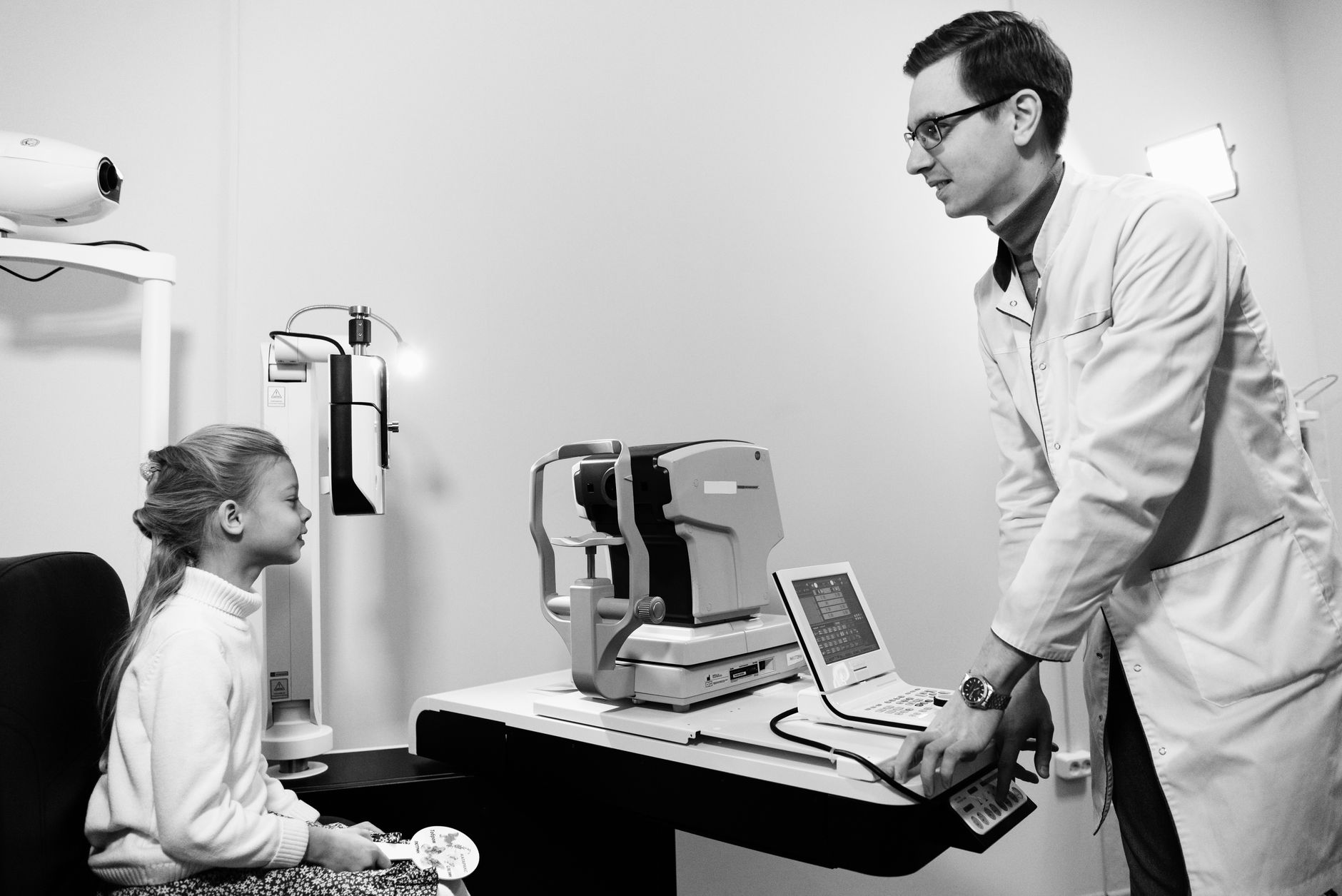
A generic, half-filled Google Business Profile is one of the most common reasons a good practice gets outranked by a smaller competitor. For an eye care practice, that means going beyond the basics:
- Choosing "Optometrist" as the primary category, with secondary categories like eye care clinic or contact lens supplier where relevant.
- Listing specific services (eye exams, contact lens fittings, LASIK consultations, pediatric eye exams, dry eye treatment) instead of a generic services section.
- Stating accepted insurance plans clearly in the business description and in answers to common questions.
- Posting about specific services and seasonal reminders, like back-to-school eye exams.
- Keeping hours, holiday closures, and the booking link accurate and current.
None of this is glamorous, but it is the foundation everything else builds on, and it removes friction at the exact moment a patient decides whether to call.
Build Individual Pages for Each Service, Not One Generic Page
Many optometry websites list every service on a single page with a paragraph each. That makes it hard for any one service to rank, since the page is not focused on a single search intent. A patient searching for a LASIK consultation and a patient searching for a pediatric eye exam want different information, and they deserve separate pages. Dedicated pages for LASIK consultations, contact lens fittings, pediatric eye exams, and dry eye treatment let you go deeper on what the appointment involves, how insurance applies, and what patients actually want to know. Search engines reward that depth, and it gives patients a clearer picture before they call.
Treat Reviews as a Core Trust Signal, Not an Afterthought
Healthcare-adjacent decisions carry more weight than most local purchases, and patients read reviews closely before trusting a new practice with their eyes. A steady stream of recent, detailed reviews reassures prospective patients and signals to Google that your practice is active and trusted. Practices that do this well make asking for a review part of the normal workflow, usually a short text or email sent after a good appointment, rather than an occasional afterthought. Responding to every review in a calm, professional tone matters too, and reviews that mention specific services or staff by name help patients and search engines understand what your practice does well.
Get Local Schema Markup and NAP Consistency Right
Schema markup is structured code on your website that tells search engines and AI systems what your practice is, where it is located, and what services you offer, rather than leaving them to guess. For an optometry practice, that typically includes local business and medical schema, service-specific markup, and FAQ markup on pages that answer patient questions. Alongside schema, your practice name, address, and phone number, known as NAP, need to match exactly across your website, Google Business Profile, and every directory you appear on, including Yelp, Healthgrades, and insurance directories. Inconsistent NAP is a quiet but common reason practices plateau in local rankings.
Publish Content That Answers the Questions Patients Are Already Asking
Some of the most valuable content a practice can publish has nothing to do with selling anything directly. Questions like how often should I get an eye exam, what are the signs I need glasses, or how do I choose the right contact lenses are searched constantly, and answering them clearly builds real topical authority. This content does double duty: it helps your site rank for searches beyond just "optometrist near me," and it is exactly the kind of clear, well-structured answer that AI assistants and AI Overviews tend to pull from and cite. Answering the question directly in the first sentence tends to perform best on both fronts.
What to Realistically Expect on Timeline
Optometrist SEO is not instant, and any plan promising overnight results is worth being skeptical of. Foundational work like Google Business Profile optimization, review generation, and NAP cleanup can produce visible map-pack movement within about 8 to 12 weeks. Broader organic growth, driven by service pages and ongoing content, tends to compound over 3 to 6 months as your site builds topical authority and trust signals. SEO is cumulative: the practices that see the strongest results keep publishing, keep collecting reviews, and keep their listings accurate.
Frequently asked questions
How often should I get an eye exam?
Most adults with no known vision problems benefit from a comprehensive eye exam every one to two years, while children, contact lens wearers, and anyone with diabetes or a family history of eye disease are often advised to go annually. An eye doctor can confirm the right interval for you.
What are the signs I need glasses?
Common signs include blurry vision at a distance or up close, frequent headaches, squinting at signs or screens, eye strain after reading, and difficulty seeing clearly at night. Any noticeable change in vision is worth booking a comprehensive eye exam to check.
How much does optometrist SEO cost?
Costs vary based on how competitive the local market is and how much of the practice's online presence needs to be built out or fixed. Most agencies offer monthly plans rather than one-off projects, since SEO is ongoing work. Our optometrist SEO service outlines current plans and pricing in detail.
How is AEO or GEO different from traditional SEO for an eye care practice?
Traditional SEO focuses on ranking a website and Google Business Profile in standard search results and the map pack. AEO and GEO, short for answer engine optimization and generative engine optimization, focus on making sure AI assistants like ChatGPT, Perplexity, and Google AI Overviews have clear, accurate information to pull from when a patient asks a conversational question. The two overlap heavily, since both depend on accurate, well-organized information about the practice, but they serve different search behavior.
How soon will my practice show up in Google's map pack?
Many practices see initial movement within 8 to 12 weeks once Google Business Profile optimization, consistent NAP details, and steady review generation are in place. More competitive markets, or practices starting from a thin online presence, may take longer to see the same results.
Ready to Turn Your Website Into a Patient-Booking Tool?
Optometrist SEO works best as a connected system: an optimized Google Business Profile, dedicated service pages, genuine reviews, consistent schema and NAP, and content that answers what patients are typing into Google or asking an AI assistant. Tackling just one of these in isolation rarely moves the needle much. If you want a clear picture of where your practice stands today, see how we approach optometrist SEO and what a full strategy looks like for a practice like yours. You can also start with our free AI-visibility audit to see how often AI assistants already mention, or miss, your practice.